











A2 — Applied Intelligence
Industrial Intelligence
Turning machines into data
Applied domain A2
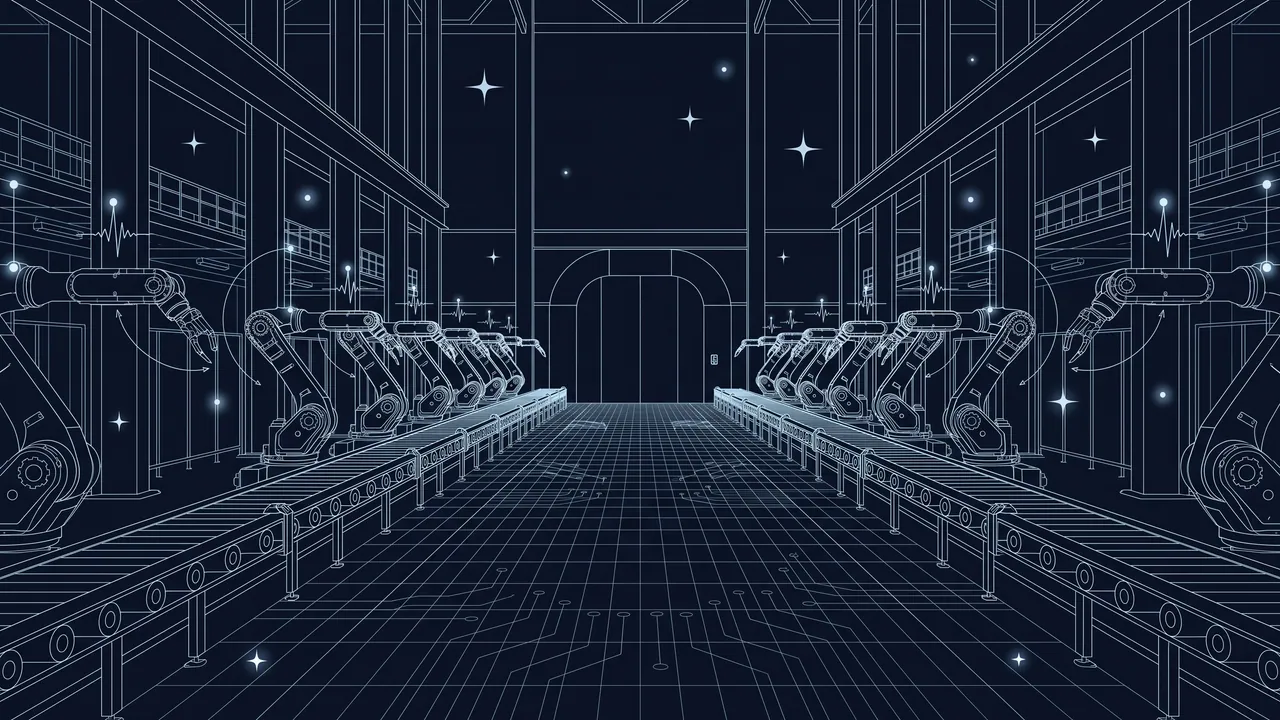
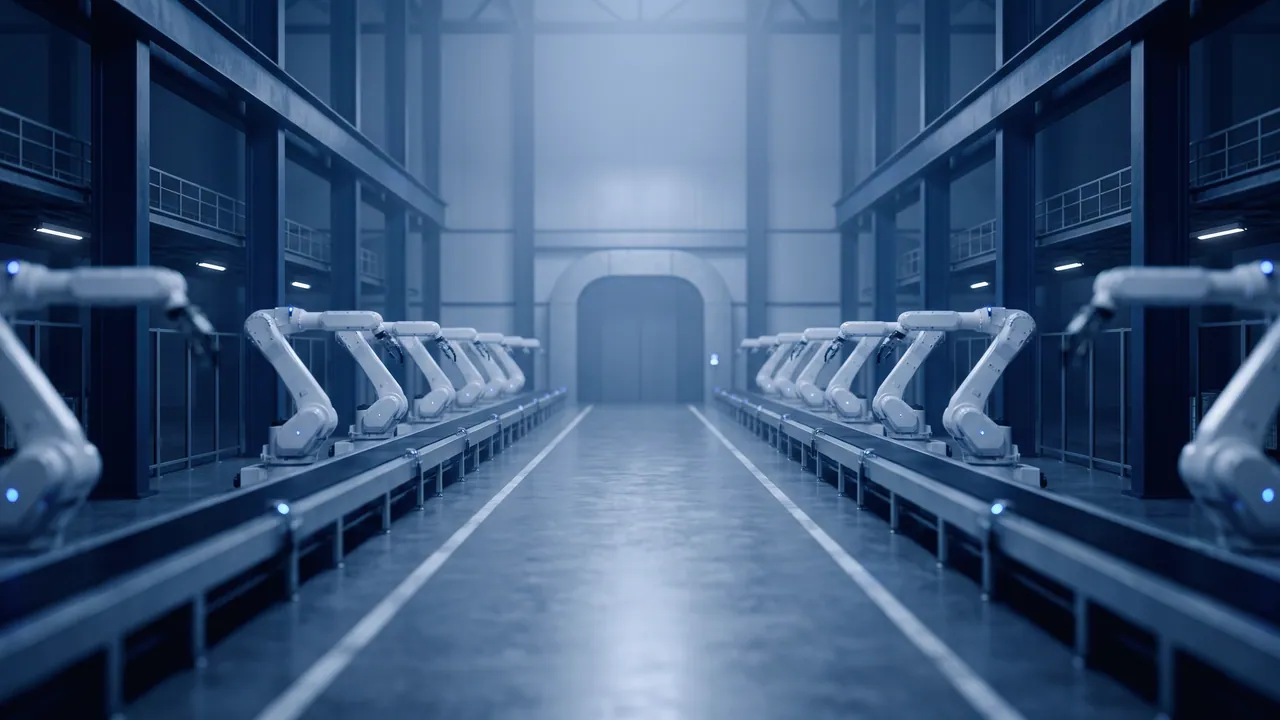
Sensors, machines, production lines and control systems continuously generate information. We connect these sources and transform operational data into intelligence.
See the system. Understand the system. Improve the system.
- Sensor data platforms
- Real-time telemetry
- Predictive maintenance
- Production analytics
- Anomaly detection
- Machine monitoring
- Operational dashboards
- Industrial data integration
The real problems
The real problems → Our approach
- 01
Machines that speak different protocols
One plant can run PLCs from several vendors, legacy Modbus devices and newer OPC UA servers side by side. Getting consistent, time-aligned data out of all of them is the first engineering problem.
Our approachConnectors at the edge
Edge gateways speak OPC UA, MQTT, Modbus and vendor PLC protocols, normalise tags and buffer data locally with store-and-forward, so a network outage does not mean lost readings.
- 02
Unplanned downtime
Failures show up in vibration, temperature and current long before a breakdown, but the signals are buried in noise and spread across systems nobody watches together.
Our approachOne asset model
Every signal is mapped to an asset hierarchy — site, line, machine, component — so data carries its context, and the same analysis can be reused across lines and plants.
- 03
The boundary between OT and IT
Control networks must stay isolated and deterministic. Every connection to IT systems has to be designed so that analytics cannot interfere with production.
Our approachAnomalies before failures
Multivariate anomaly detection learns each machine’s normal behaviour, and remaining-useful-life models turn gradual wear into a maintenance window you can plan.
- 04
Data without context
A temperature reading means little without knowing the asset, the product being run and the shift. Without an asset model, dashboards show numbers, not situations.
Our approachRead-only by design
Data leaves the control network through a one-way, segmented architecture designed around the zone-and-conduit model of IEC 62443. Analytics observes production; it does not command it.
The product for this domain
VARDA Parallax
Industrial telemetry & predictive maintenance
See the machine from every angle.
Connects PLCs, SCADA and sensors over OPC UA, MQTT and Modbus, and turns telemetry into anomaly alerts, remaining-useful-life estimates and OEE.
- Industrial connectivity
- Edge gateway with store-and-forward
- Time-series store and asset model
- Multivariate anomaly detection
Illustrative scenarios
Illustrative scenarios
Scenarios are illustrative; they do not describe specific clients.
- 01
Early warning on critical motors
ContextA mid-sized automotive supplier runs press lines where a single motor failure stops production. Maintenance follows the calendar, yet failures still arrive without warning.
OutcomeVibration and current data feed an anomaly model for each motor. Maintenance teams receive early warnings together with the contributing signals and schedule interventions into planned stops.
- 02
One view across plants
ContextA food manufacturer with plants in several cities calculates OEE differently at each site, so performance cannot be compared and improvement work cannot be targeted.
OutcomeA shared asset model and a single OEE definition apply to every line. Managers compare plants on the same basis and trace losses to specific machines and shifts.
- 03
Process stability in batch production
ContextA chemical plant sees quality and energy use vary from batch to batch, but cannot link the variation to process conditions spread across SCADA and laboratory systems.
OutcomeProcess, laboratory and energy data are aligned per batch. Engineers see which conditions precede off-spec batches and adjust set points on evidence rather than experience alone.
Compliance & governance
Compliance & governance
- Designed to support IEC 62443 zone-and-conduit segmentation between control and enterprise networks.
- Designed to support ISO/IEC 27001-style controls for access management, logging and change control on OT data platforms.
- Designed to support KVKK requirements where operator or shift data can identify individuals.
- Designed to support the product traceability and quality-record retention that customer and sector audits require.
Frequently asked questions
Frequently asked questions
01Do we need to install new sensors?
Often not at first. PLCs, drives and SCADA systems already hold a great deal of usable data. We start with what is available, identify the gaps that matter for a specific failure mode or metric, and only then recommend targeted additional sensors.
02Will connecting to our PLCs affect production?
The architecture is designed so that it does not. Data is read, never written; collection runs through segmented networks and rate-limited edge gateways, and nothing on the analytics side can send commands to the control layer.
03Does our data have to leave the plant?
No. The platform can run entirely on site, at the edge or in a plant data centre. If you want a cross-plant view, only the aggregated or selected data you approve is replicated to a central environment.
04How do you prove predictive maintenance works before scaling it?
We select a few critical assets with a known failure history, run the models alongside existing maintenance practice and compare their warnings with what actually happened. The decision to scale rests on that evidence, not on a demonstration.
Let’s design the right architecture for industrial intelligence.
Sensor platforms, real-time telemetry and predictive maintenance that connect machines and control systems and turn operational data into decisions.